Buyer protection


Contents
You make bath bombs with donkey milk powder from a simple basic recipe: mix 200 g of bicarbonate of soda, 100 g of citric acid, 50 g of cornflour and 15–20 g of donkey milk powder, work in 30–40 ml of plant oil until the mixture holds together like damp sand, press it into moulds and leave to dry for one to two days. This makes about 4 to 5 medium-sized bombs. The ratio of bicarbonate of soda to citric acid is around 2 to 1 – this is what makes them fizz in the bath.
How bath bombs work
The fizzing is a simple chemical reaction: when bicarbonate of soda and citric acid come into contact with water, carbon dioxide forms – the bomb fizzes and dissolves. Cornflour binds the mixture and slows the reaction a little. The oil makes the mixture mouldable and gives the bath water a smooth feel on the skin.
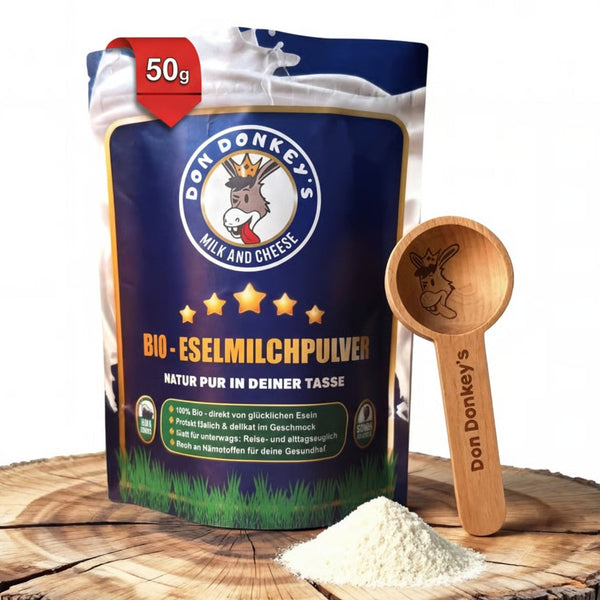
In this recipe, donkey milk powder is a mild, caring ingredient that gives the bath water a slightly milky touch. It is not an active ingredient but turns the bath bomb into a little milk bath ritual. Because the powder is dry, it is easy to work with – liquid milk would start the reaction too early. Read more about the differences in Donkey milk powder or fresh donkey milk?
Ingredients for 4–5 bath bombs
- 200 g bicarbonate of soda (sodium bicarbonate)
- 100 g citric acid (powder)
- 50 g cornflour
- 15–20 g organic donkey milk powder
- 30–40 ml neutral plant oil, such as almond, sunflower or olive oil – or 20 g melted cocoa butter plus a little oil
- optional: a few drops of water from a spray bottle
- optional: a few dried flowers, such as rose or cornflower
- gloves, a bowl and moulds (bath bomb half-spheres, silicone or ice cube moulds)
Step by step
- Mix the dry ingredients: Thoroughly combine the bicarbonate of soda, citric acid, cornflour and donkey milk powder in a dry bowl. Break up any lumps with your fingers or through a sieve. Wear gloves while doing so.
- Work in the oil: Add the oil gradually and knead it in with your hands. The mixture is right when it feels like damp sand and holds together when squeezed.
- Adjust the consistency: If the mixture still crumbles, spray a little water over it once or twice and keep kneading straight away. If it starts to foam, that was too much – work in a little cornflour.
- Shape: Place a few flowers in the mould if you like. Press the mixture firmly into both halves, overfill slightly and press the halves firmly together.
- Unmould: After a few minutes, carefully release from the mould. You can leave small silicone moulds filled until dry.
- Leave to dry: Let the bombs harden at room temperature in a dry place for at least 24 hours, ideally two days. Damp rooms such as the bathroom are not suitable.
- Store: Keep the finished bombs airtight and dry, for example in a screw-top jar, and use within a few weeks.
Variations
| Variation | Change | Note |
|---|---|---|
| Bath truffles | Press the mixture into an ice cube mould | 2–3 pieces per full bath |
| With cocoa butter | Replace part of the oil with melted cocoa butter | Bombs become firmer, with a faint chocolate scent |
| With flowers | Place a few dried flowers in the mould | Use sparingly, or bits will remain in the tub |
| Fragrance-free | Do not add essential oils | Good for sensitive skin and as a gift |
Essential oils are not a must. If you like fragrance, a few drops for the whole batch are enough. Some people are sensitive to fragrances, so the fragrance-free version is often the safest choice. You can also leave out food colouring – it can stain the bath.
Safety and skin tolerance
- Wear gloves: Pure citric acid can irritate skin and eyes. Work with gloves and do not touch your face.
- Protect your eyes: If children are helping, safety glasses are a good idea. Crafting only under supervision.
- Not edible: Bath bombs sometimes look like sweets. Keep them out of reach of children and label them if you give them as gifts.
- Skin tolerance: If you have sensitive skin, try the bath water on a small area first, for example the inside of your elbow. Avoid bath additives on irritated or broken skin. Anyone with a milk protein allergy should not use bath bombs containing milk powder.
- Slip hazard: Oil makes the bath slippery. Get in and out carefully and rinse the tub afterwards.
- For personal use only: Homemade bath bombs are suitable for you and as a personal gift. Anyone wishing to sell cosmetics in the EU must meet strict requirements, including a safety assessment.
If you prefer a bath without the fizz, you will find a simple guide in How to make a donkey milk bath. And if you enjoy crafting, you might like to try making soap with donkey milk.
Frequently asked questions
Why do my bath bombs crumble?
Usually the mixture was too dry or not pressed firmly enough. Work in a little more oil and press the mixture firmly into the mould.
Why have my bath bombs expanded or cracked?
Too much moisture was involved – from water, damp hands or high humidity. Spray water very sparingly and dry the bombs in a dry room.
Can I use fresh donkey milk instead of powder?
Not for bath bombs, as liquid starts the fizzing reaction while mixing. Fresh donkey milk is better added directly to the bath water.
How long do homemade bath bombs keep?
Stored dry and airtight, a few weeks. Over time the fizz weakens and the oil can lose its freshness, so it is best to use them soon.
Note: This guide describes a craft idea for private use. Bath bombs with donkey milk powder can make bathing pleasant and feel soft on the skin, but they are not a treatment. If you have skin problems or allergies, please talk to your doctor first.
Homemade bath bombs make a lovely gift with a personal touch. Our donkey milk comes from donkey farms in Germany – and with a donkey sponsorship you support the animals directly.