

What do donkeys eat? Feed list: What donkeys can and cannot eat
What do donkeys eat? Straw and hay form the basis, with treats only occasionally. Our feeding list shows at a glance what...
 Buyer protection

DON DONKEY'S® · from the Münsterland, Germany
Laboratory-tested in Germany and delivered frozen to your door – from small European partner farms.
Shipping is on us (regularly €49.90 + €14.90 shipping). For your first order, delivery within Germany, incl. VAT and express shipping. Unit price: €249,50 / l incl. shipping.
Two ways to get to know donkey milk – each at an all-in price. What you see here is what you pay: shipping included, a one-time order with no follow-up deliveries, no hidden costs.

200 ml donkey milk
200 ml of liquid donkey milk, delivered to you frozen by express. Enough to get to know it at your own pace and fit it into your everyday life.
regularly €49,90 + €14,90 shipping (€64,80) – shipping is on us
Unit price: €249,50 / l (incl. shipping)

20 g donkey milk powder
Donkey milk in powder form, with a long shelf life and no cold chain. To mix whenever you like.
Unit price: €1.245,00 / kg (incl. shipping)
The free shipping (code NEU200) applies once to your first order with delivery within Germany. All prices incl. VAT and incl. shipping.
Our liquid donkey milk is unpasteurised raw milk and is shipped frozen. Please note the information on storage and consumption on the label.
Directly from the partner farm
Where our donkey milk comes from – filmed on site.
With subtitles · tap for sound
Straight from our customers
With subtitles · tap for sound
Our range

Milked by hand, laboratory-tested in Germany, sent to you frozen by express.
from €24,90 Unit price €249,00 / lincl. VAT, plus shipping
1 litre: €199.90 – around 20% less per 100 ml than the 100 ml bottle.
Choose quantity →
10 g of powder and 90 ml of water make about 100 ml. Practical as a supply and for on the go.
from €24,90 Unit price €1.245,00 / kgincl. VAT, plus shipping
View →

Around 25 litres of donkey milk go into 1 kg of donkey cheese.
from €249,90 Unit price €4.998,00 / kgincl. VAT, plus shipping
View →
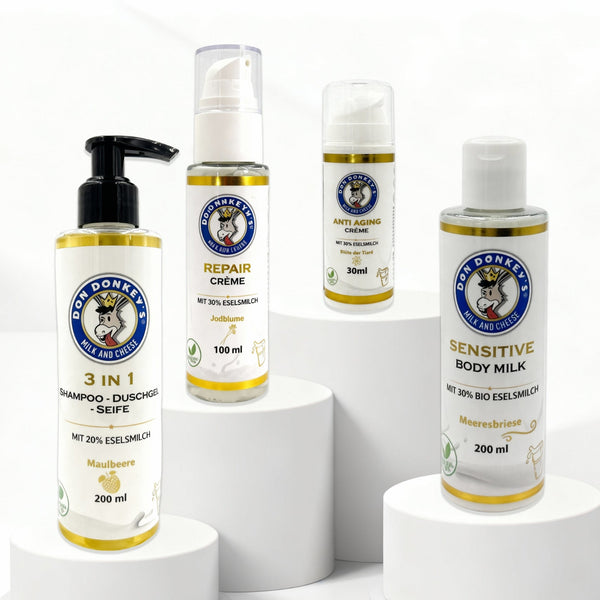
Body milk, care cream, face cream and 3-in-1 with 20–30% donkey milk.
e.g. Body Milk 200 ml: €69,90 Unit price €349,50 / lincl. VAT, plus shipping
To skincare →
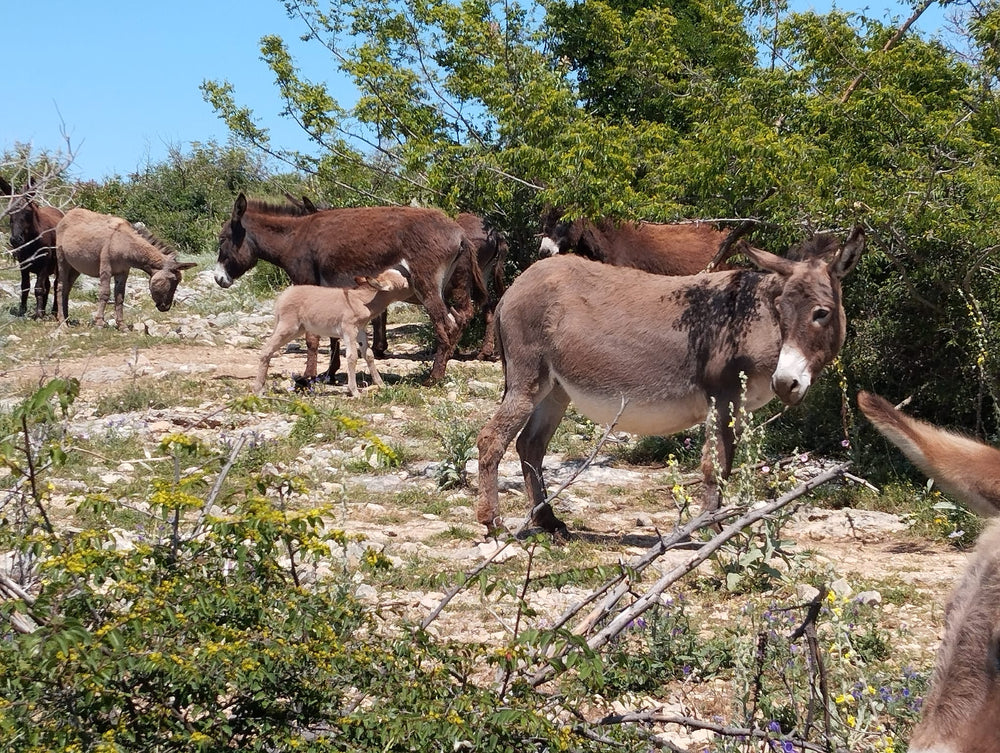
How we work
That is why donkey milk costs more than cow's milk. More on this in our article What lies behind price and availability.
Vitalprogramm
For everyone who wants to enjoy donkey milk more than once: 6 deliveries at 4-week intervals, with 30% off every delivery.
Price per 100 ml
| 100 ml bottle€24,90 per bottle (€249,00 / l) | €24,90 |
| 1 litre€199,90 (€199,90 / l) | €19,99 |
| 10 litres€1.690,90 (€169,09 / l) | €16,91 |
| Vitalprogramm, 1 litre€139,93 per delivery (€139,93 / l) | €13,99 |
Current single prices incl. VAT, plus shipping. Vitalprogramm: 30% off the single price, fixed term of 6 deliveries.
A journey into a drop
Start the journey or drag the slider: from the bottle to a single drop to lysozyme and lactoferrin – two proteins that occur naturally in donkey milk.
In numbers
Nothing added, nothing removed: this is how donkey milk is composed – from the big picture down to the individual proteins.
What makes it special lies in the small remainder – the dry matter.
Lactose, the natural milk sugar, makes up the largest part. Fat is only present in a small proportion.
There are around 1.7 g of protein in 100 ml. A large part of this is whey protein – including two components that are characteristic of donkey milk.
A naturally occurring enzyme, described by Alexander Fleming in 1922. Only present in traces in cow’s milk.
An iron-binding glycoprotein. Small in quantity, but a characteristic component.
The whey proteins present in the largest quantities.
About half of the protein. For comparison: in cow’s milk it is around 80 %.
| Energy | approx. 170 kJ / 40 kcal |
| Fat | approx. 0.9 g |
| Carbohydrate | approx. 6.4 g |
| of which sugars (lactose) | approx. 6.4 g |
| Protein | approx. 1.7 g |
Schematic illustration, not to scale. All figures are rounded average values; as a natural product, the composition varies depending on the animal, lactation stage, feeding and season. The binding nutritional values are on the label. The illustration shows the structure of milk and does not describe any effect in the human body.
Curious how it tastes?
Free shipping on your first order, delivery within Germany.
Origin & husbandry
Our donkey milk comes from selected partner farms in Europe that we know personally. There the jennies live in their herds on large pastures and are milked by hand – straight from the farm to you, without intermediaries.
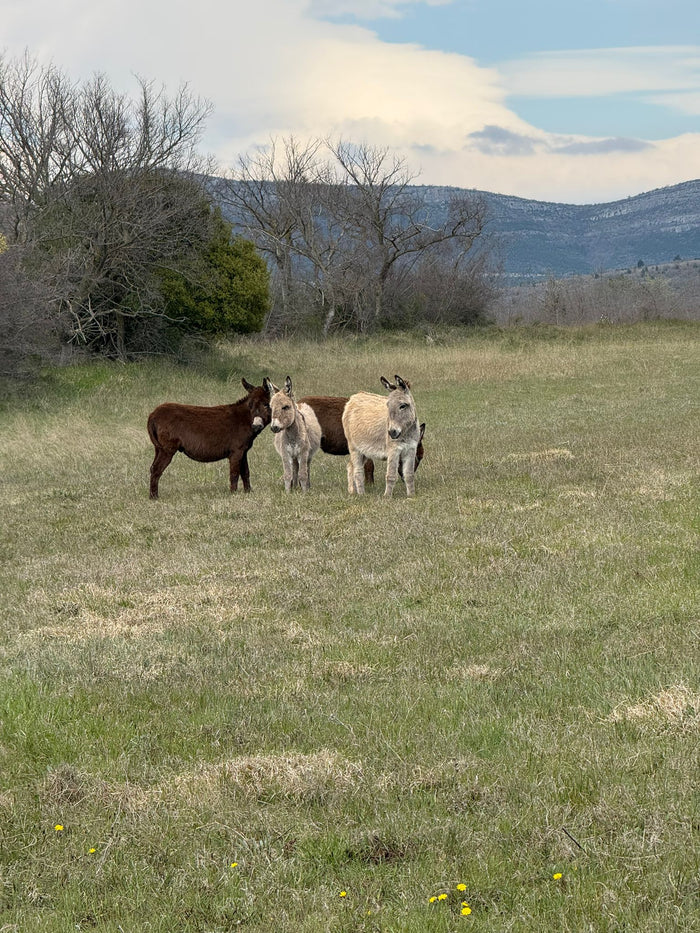
The jennies live in their herds on open land – with room to move, to rest and to live at their own pace.
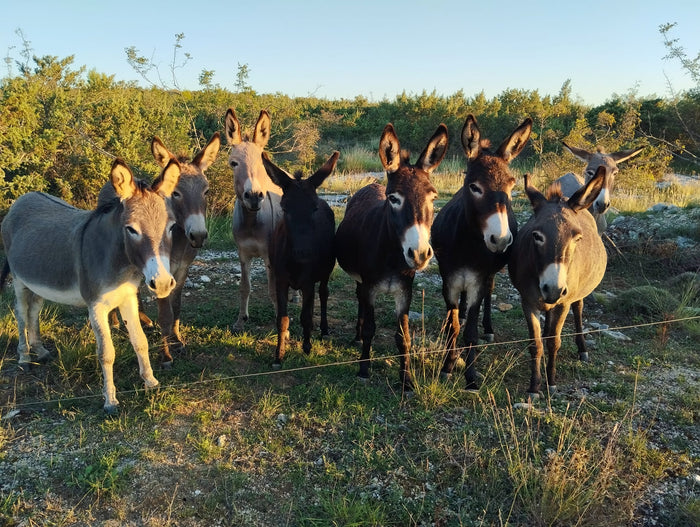
Donkeys are social animals. On our partner farms they stay together in stable herds – from the foal to the oldest jenny.
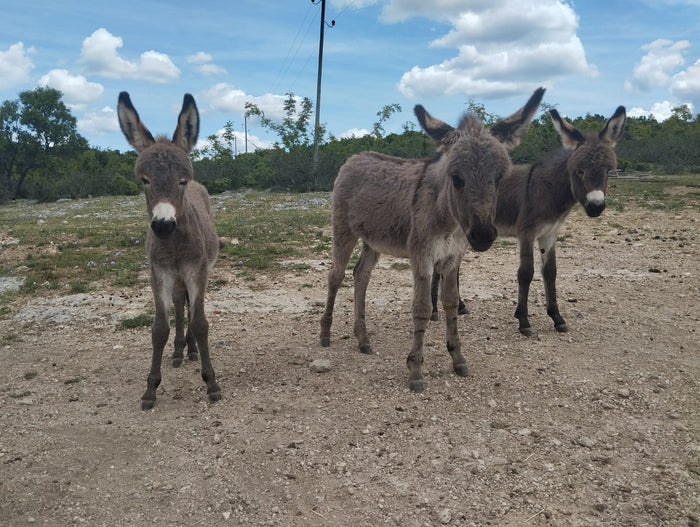
Some jennies only come into the stable briefly for milking. If a mother prefers to stay in the bushes with her foal, she is milked right there in the pasture.
← Swipe for more →
How our partner farms work →“A jenny gives her milk when she is relaxed. That's why nobody rushes here.”
Brian & Justin Netuschil
Our promise
We often hear one question: what actually happens to the foals? Here is our honest answer – this is how our partner farms handle it.
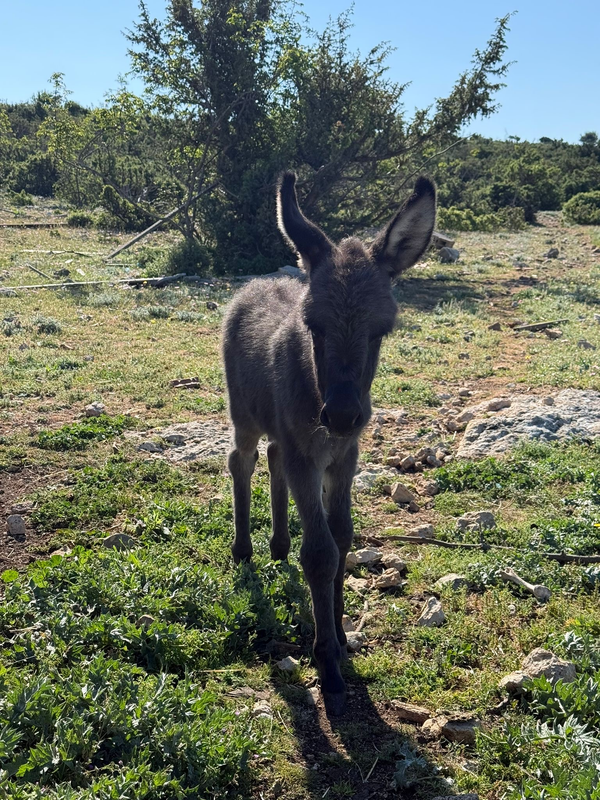
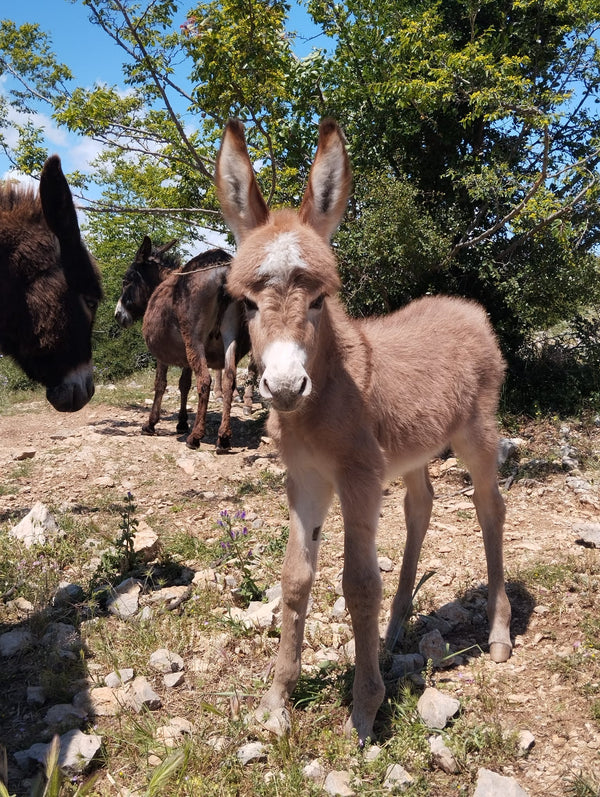
For the first two to three months after birth, the mare is not milked for our milk. This time belongs to mother and foal.
Mother and foal are only separated briefly for milking. Afterwards they are reunited straight away.
A jenny usually gives 0.5 to 1 litre of milk a day, at most around 2 litres – in addition to what her foal drinks. This is craftsmanship, not mass production.
For us, foals are not a by-product of milk production. As they grow up, they stay in the herd or go to other suitable farms, breeders or private donkey keepers.
We don't promise that we can follow every single foal for its whole life – that would be dishonest. What we do promise: there are clear agreements with our partner farms on how the animals are treated, and we know every farm personally.
More than milk
Donkeys are curious, social and have a mind of their own. In short videos we show who is behind the milk.
← Swipe for more · Tap to play
Why we do this: in many regions of Germany hardly any donkeys live today. With our videos we show their character and the people who keep them – so that these animals are not forgotten.
Real pictures from the partner farm
On the partner farm, the milk is filtered after milking, filled into bottles by hand, sealed and frozen. These shots were taken during a bottling session.

The milk from the churn runs through a filter into the measuring jug.

From the measuring jug it is poured into the bottles by hand – bottle by bottle.

Every bottle is sealed by hand. Batch and best-before date are on the label.

The sealed bottles go into the freezer and are frozen.
The milk is then tested in a laboratory in Germany and sent to you frozen.
Delivery & at home
Laboratory-tested in Germany, then sent to you by GO! Express in an insulated box with dry ice – dispatch on Mondays and Wednesdays.
Slowly in the refrigerator at 2–7 °C, ideally overnight. Shake briefly before drinking.
Well chilled from the glass: that's the best way to taste its mild, slightly sweet flavour.
In coffee, muesli or a smoothie – just as you like.
Keep frozen at −18 °C until use. Please observe the instructions on the label.
Our 100 ml bottle
Ready for your first sip?
Free shipping on your first order, delivery within Germany. Free shipping from 1 litre.
The people behind it
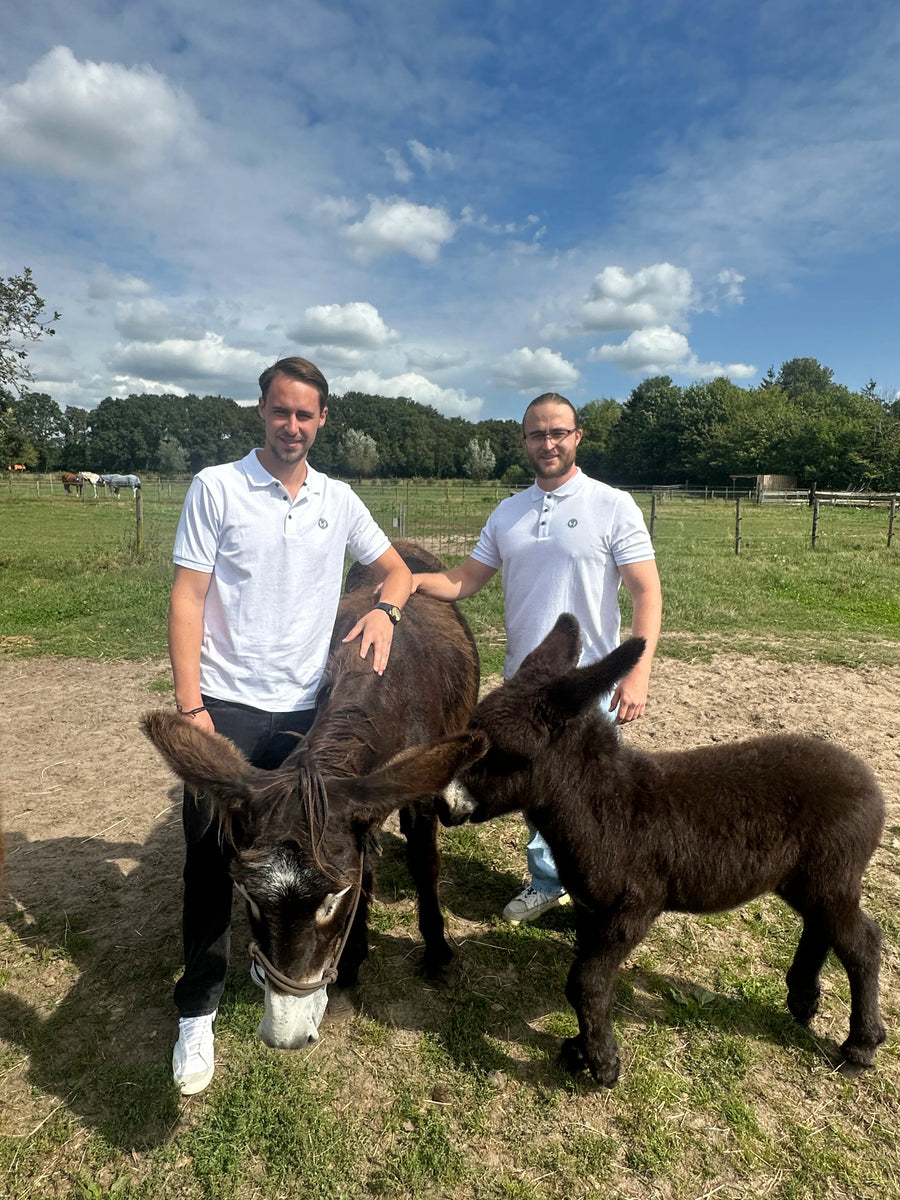
We are Brian and Justin Netuschil – two brothers from Lüdinghausen in the Münsterland, Germany. DON DONKEY'S® exists because we believe such a special natural product should find its way to people who appreciate it.
 In the press · Westfälische Nachrichten, 12 Sept 2026
“Two brothers from Lüdinghausen sell donkey products”A look behind the scenes – about our brand, our values and the people behind DON DONKEY'S®.Read the article
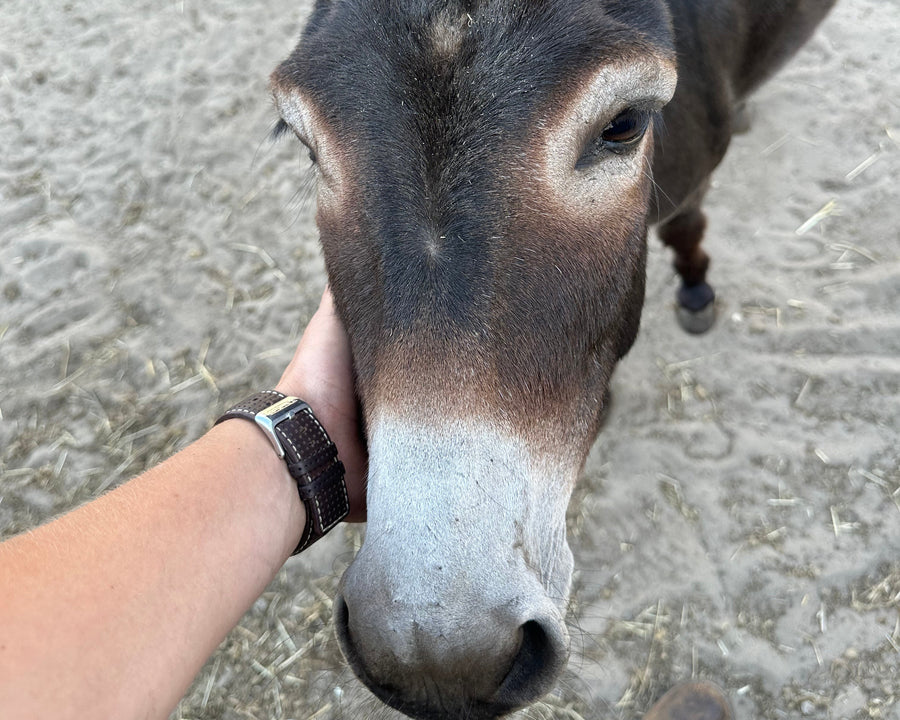
Personal advice
Whether quantity, storage or delivery: write to us or call. You'll speak directly with Brian or Justin.
Brian & Justin Netuschil · Lüdinghausen, Münsterland
Mon–Fri 9 am–5 pm (CET)
Donkey milk is a food, not a medicine. If you are considering it during an illness, during pregnancy or breastfeeding, or for your child, please talk to your doctor first. Donkey milk is not a substitute for breast milk or infant formula.
Good to know
Mild and slightly sweet, with a rather light consistency. It's best to try it well chilled and pure. More about the taste
We ship frozen with GO! Express on Mondays and Wednesdays. Within Germany and Austria, delivery takes place 24 hours after dispatch. At home, store the bottles at −18 °C and thaw them slowly in the refrigerator (2–7 °C). Please observe the instructions on the label.
10 g of powder with 90 ml of water makes about 100 ml. The powder needs no cold chain and is shipped with DHL. Please observe the instructions on the label.
Yes. Donkey milk contains about 6–7 g of lactose per 100 ml, which is rather more than cow's milk (around 4.7 g). It also contains milk protein. If you have lactose intolerance or a milk protein allergy, please check with your doctor beforehand whether donkey milk is suitable for you.
A jenny usually gives 0.5 to 1 litre of milk a day, at most around 2 litres – in addition to what her foal drinks. Milking is done by hand and in small quantities, plus laboratory testing and frozen express shipping. From 1 litre the price per 100 ml goes down, and in the Vitalprogramm you save 30% on every delivery.
From the magazine
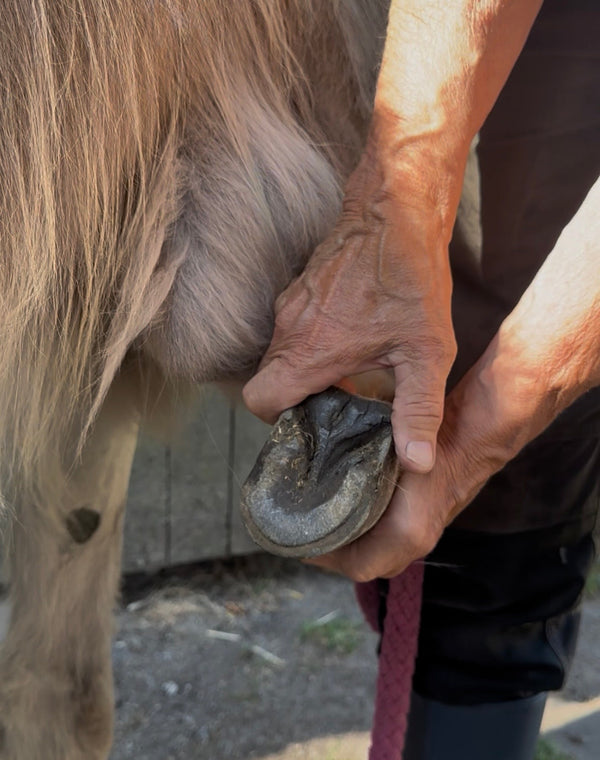
What do donkeys eat? Straw and hay form the basis, with treats only occasionally. Our feeding list shows at a glance what...
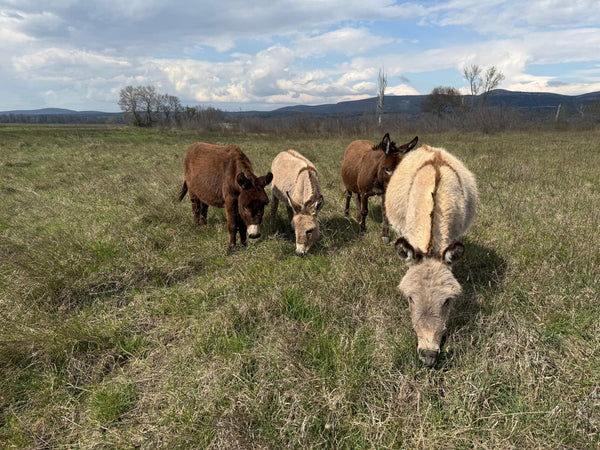
Fresh, frozen or as powder: what to look out for when buying donkey milk – from origin to laboratory testing to delivery.
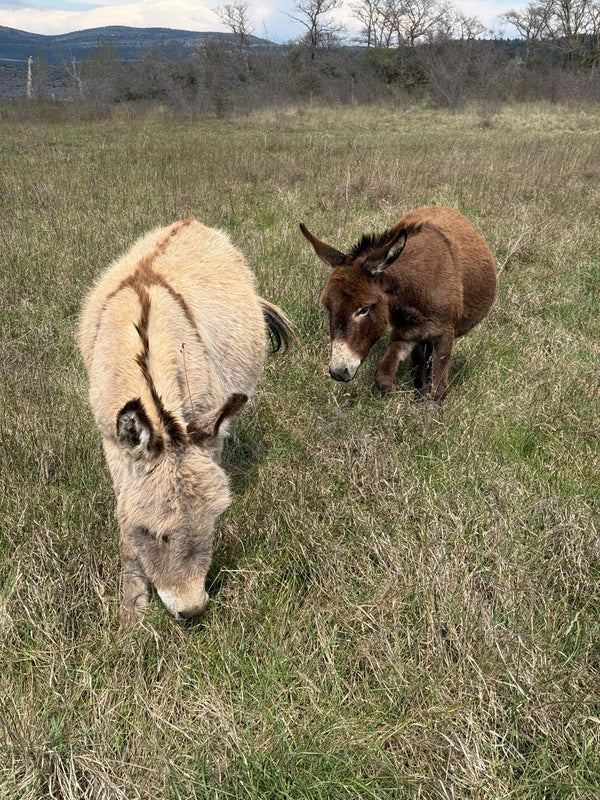
Mild, slightly sweet, rather light: what donkey milk tastes like and how it differs from cow's milk.