Buyer protection


60 % donkey milk · Chilled · In the gold tin
Donkey Cheese
A delicately creamy cheese made from 60 % donkey milk and 40 % goat’s milk – produced in small quantities together with one of our partner farms, portioned by hand and vacuum-packed. One kilo takes around 25 litres of donkey milk.
€249,90
Grundpreis: €4.998,00 / kg
incl. VAT · shipped chilled by GO! Express, free shipping to Germany and Austria (Shipping info)
- Chilled by GO! Express, free shipping (DE & AT)
- 60 % donkey milk, 40 % goat milk
- In the gold tin with a card
Product information
- Name
- Cheese made from pasteurised donkey and goat’s milk, full-fat
- Ingredients
- pasteurised donkey milk (60 %), pasteurised goat’s milk (40 %), lactic acid, cheese cultures, calf rennet, table salt
- Allergens
- Contains milk (donkey milk, goat’s milk) including lactose.
- Fat content
- Fat in dry matter min. 45 % · moisture in fat-free cheese mass min. 54 %
- Net quantity
- see selected quantity
- Storage
- Store refrigerated. Unopened, keeps until the printed best-before date. After opening, keep refrigerated and consume within a few days.
- Food business operator
- DON DONKEY’S® – Netuschil Enterprise GmbH, Berenbrock 40, 59348 Lüdinghausen, Deutschland
Nutrition information per 100 g
| Energy | 1171 kJ / 282 kcal |
|---|---|
| Fat | 22 g |
| Carbohydrate | 3 g |
| Protein | 18 g |
Shipping & delivery
The cheese travels to you chilled and in insulated packaging by GO! Express. We ship on Mondays and Wednesdays so that nothing is in transit over the weekend – in Germany and Austria your parcel usually reaches you 24 hours after dispatch, in Switzerland after 24–48 hours. Free shipping to Germany and Austria. Please put it in the fridge straight after arrival.
Serving like a connoisseur
Take the cheese out of the fridge 20 to 30 minutes before serving and only open the vacuum packaging shortly beforehand. This lets its delicate creaminess and fine, mild flavour come through. Cut it with a thin, smooth knife or portion it with a warm spoon.
Curious about donkey milk? Shipping is on us.
Our donkey cheese is something for special occasions. If you would like to try donkey milk first, there are two simple ways to start with your first order – each at an all-in price: shipping included, a one-time order with no follow-up deliveries, no hidden costs.

First sip
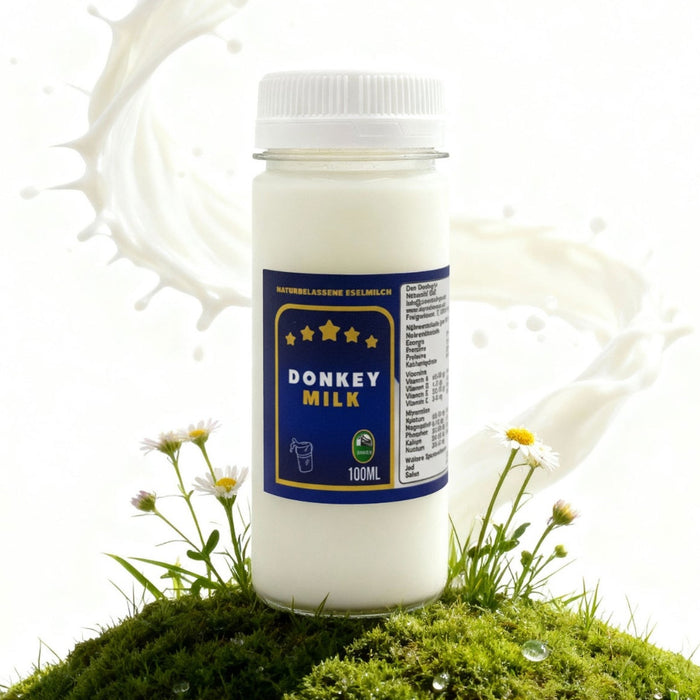
200 ml donkey milk
200 ml of liquid donkey milk, delivered to you frozen by express. Enough to get to know it at your own pace and fit it into your everyday life.
incl. shipping & VAT
regularly €49,90 + €14,90 shipping (€64,80) – shipping is on us
Unit price: €249,50 / l (incl. shipping)
- 200 ml donkey milk
- Express shipping included (worth €14,90)
- Frozen in insulated packaging
- Shipping on us – applied automatically at checkout

Powder sample
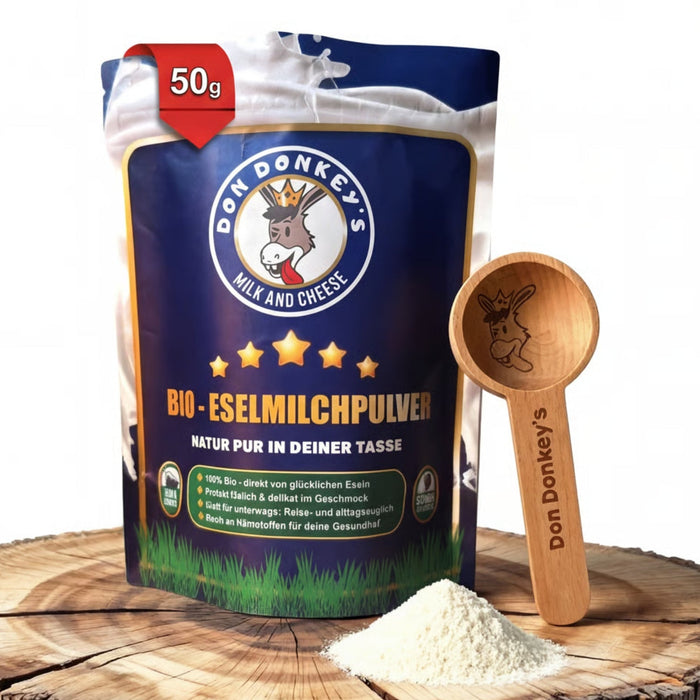
20 g donkey milk powder
Donkey milk in powder form, with a long shelf life and no cold chain. To mix whenever you like.
incl. shipping & VAT
Unit price: €1.245,00 / kg (incl. shipping)
- 20 g donkey milk powder
- Shipping included
- Shipped with DHL
- Shipping on us – applied automatically at checkout
The free shipping (code NEU200) applies once to your first order with delivery within Germany. All prices incl. VAT and incl. shipping.
Our liquid donkey milk is unpasteurised raw milk and is shipped frozen. Please note the information on storage and consumption on the label.
Why there is so little of this cheese
25 litres of donkey milk make a single kilo.
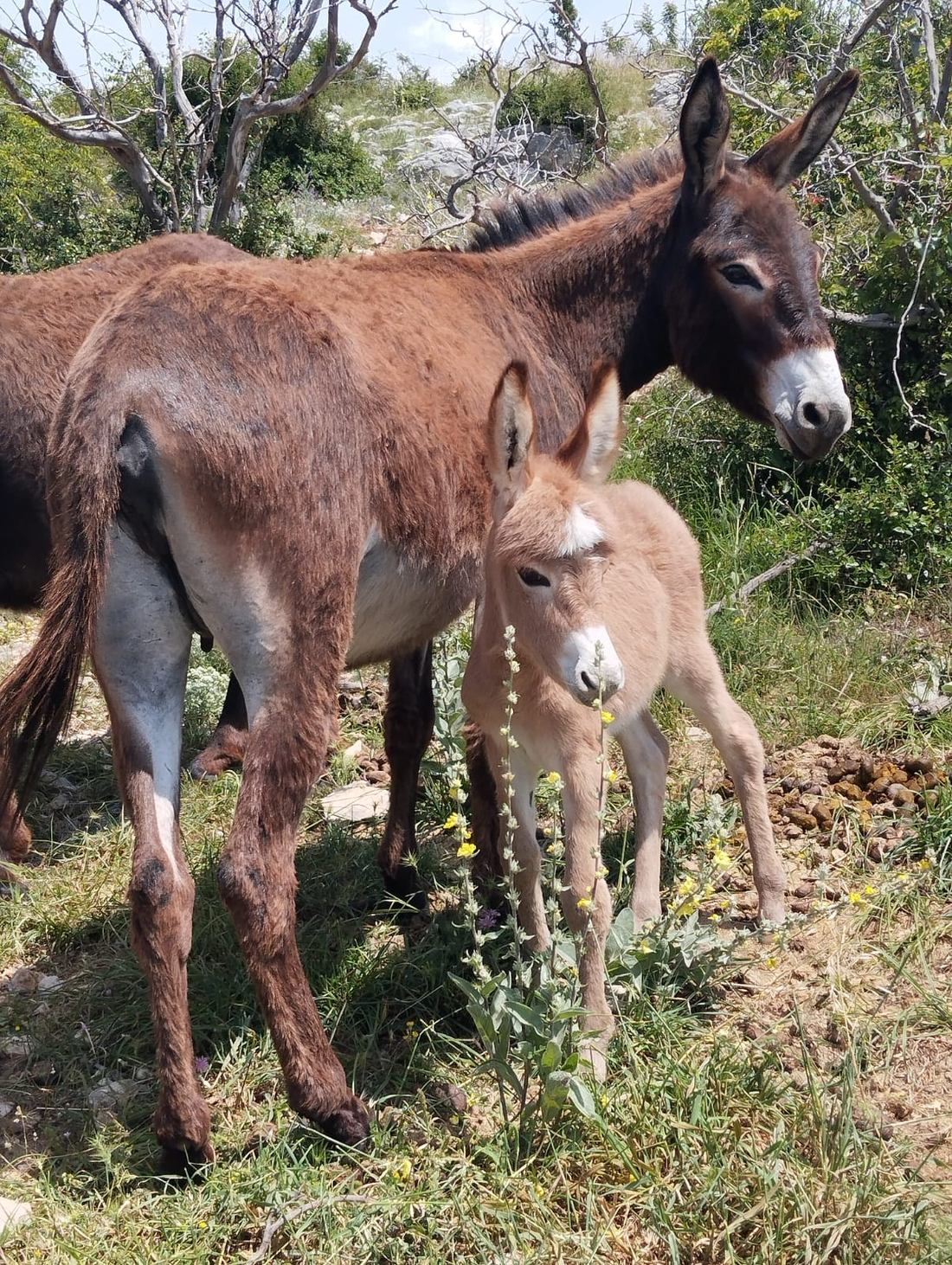
A jenny gives only a little milk – and her foal drinks most of it. On average we take only 200 to 500 ml per jenny per day.
Litre by litre, day by day, jenny by jenny. Most cheeses need around 10 litres of milk per kilo. Ours needs 25 litres of donkey milk.
This makes a single kilo of cheese. Each 50 g nugget contains around 1.25 litres of donkey milk – the daily share of three to six jennies.
Most cheeses
around 10 litresof milk per kilo of cheese
Our donkey milk cheese
around 25 litresof donkey milk per kilo of cheese
One nugget
50 gfrom around 1.25 litres of donkey milk – portioned by hand
How it is made
Seven steps. Not one of them in a hurry.
Donkey milk cheese cannot be made in large vats or by the stopwatch. It is made in small quantities together with one of our partner farms – using a process that takes experience and time.
-
The foal drinks first
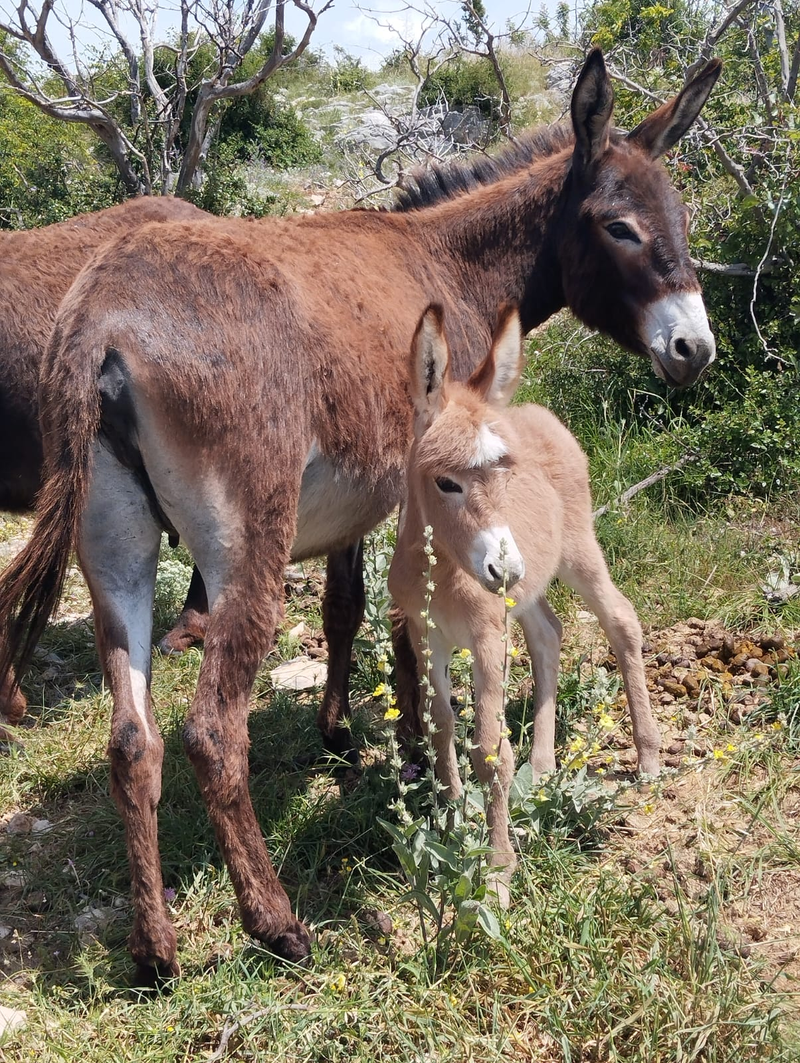
Milked by hand
On our partner farm, every jenny is milked by hand – and only once her foal has been fed. The fresh milk is cooled immediately.
-
The ratio is no coincidence
60 % donkey milk, 40 % goat’s milk
Donkey milk naturally contains very little casein – the protein that turns milk into cheese. On its own it would hardly set. A share of goat’s milk gives the cheese structure, the donkey milk brings the delicacy.
-
Recipe secret
Gently pasteurised
The milk mixture is heated gently, only as much as necessary. Exactly how warm remains part of our recipe.
-
Resting time rather than speed
Set with rennet
With cheese cultures and natural calf rennet, the milk is slowly set. This is where it is decided how delicate the cheese will be – patience rather than speed.
-
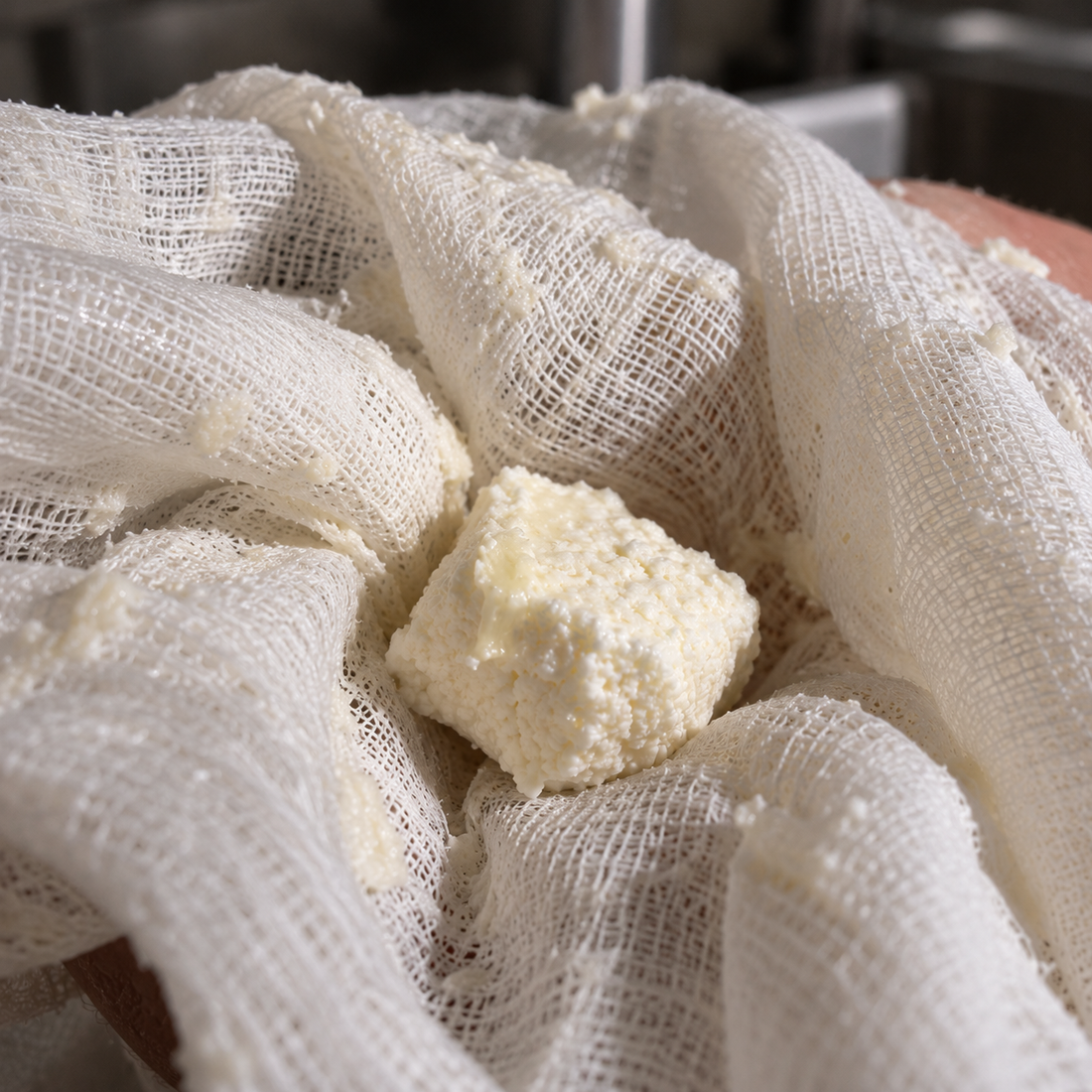
Handwork with the cloth
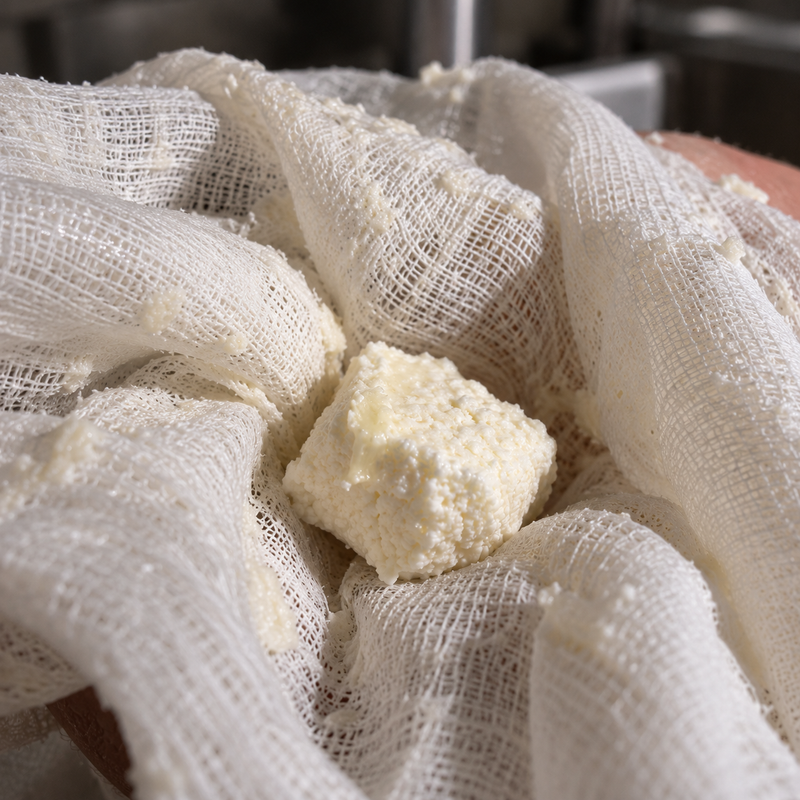
The curd in the cheesecloth
The fine, soft curd is carefully ladled into cheesecloths. The whey is allowed to drain slowly until the mass has just the right creaminess.
-
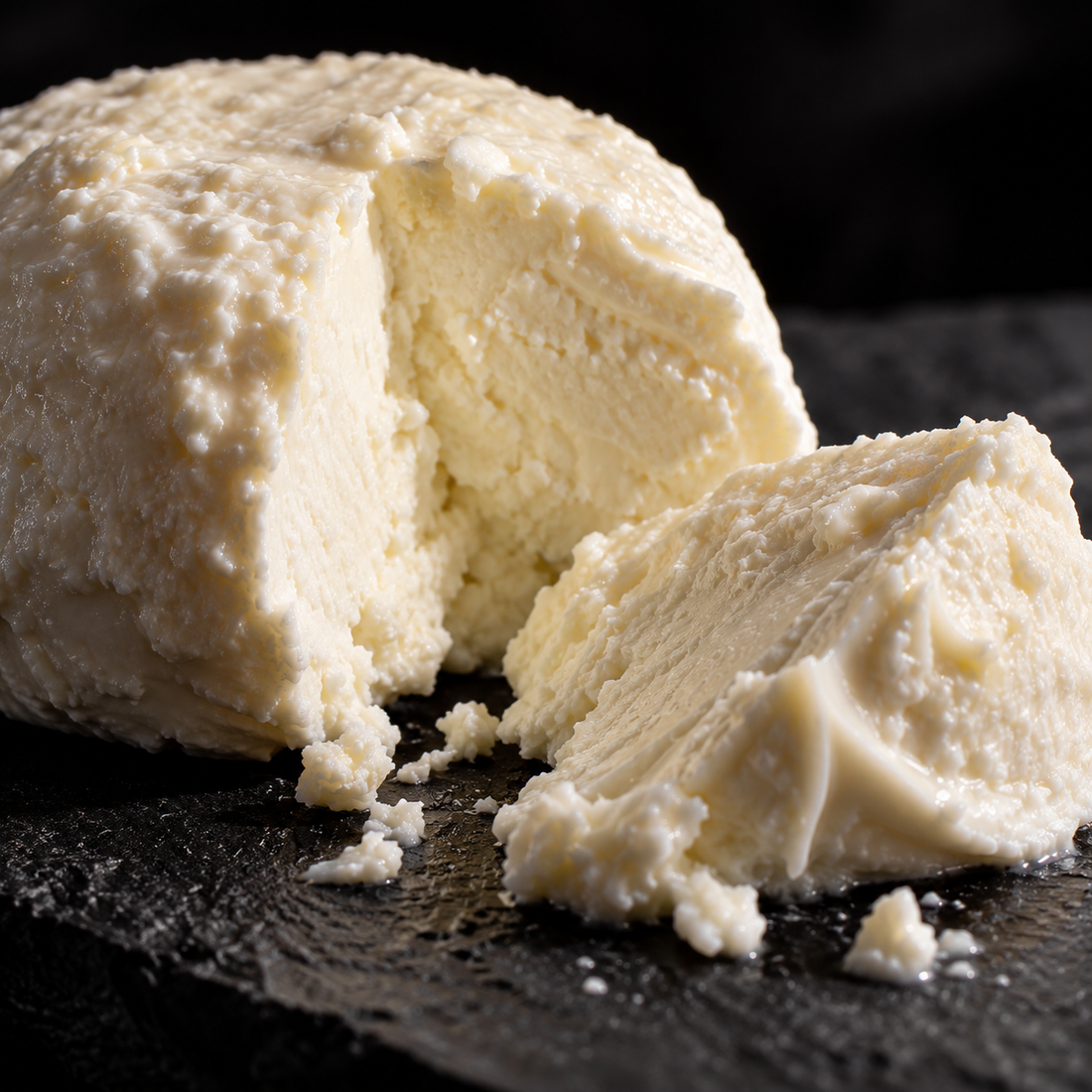
50 g each
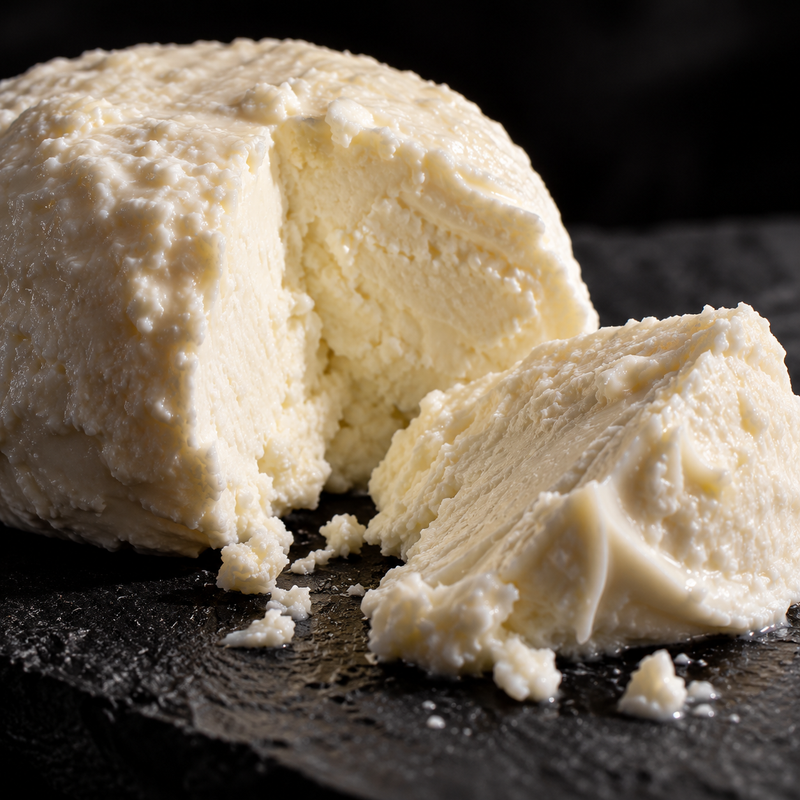
Portioned by hand
Salted and portioned by hand into nuggets of 50 g each. No two pieces are exactly alike – that is how it should be.
-
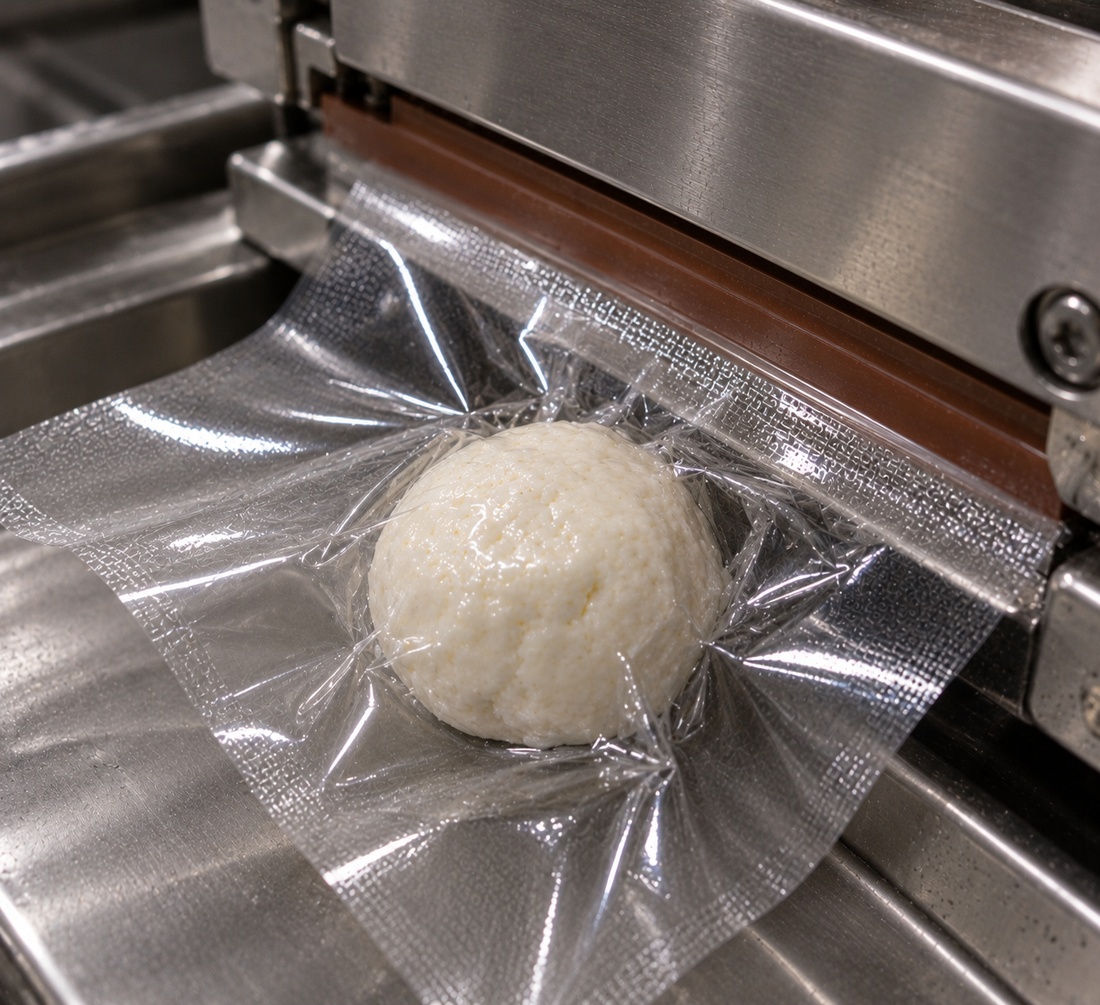
Chilled all the way to you
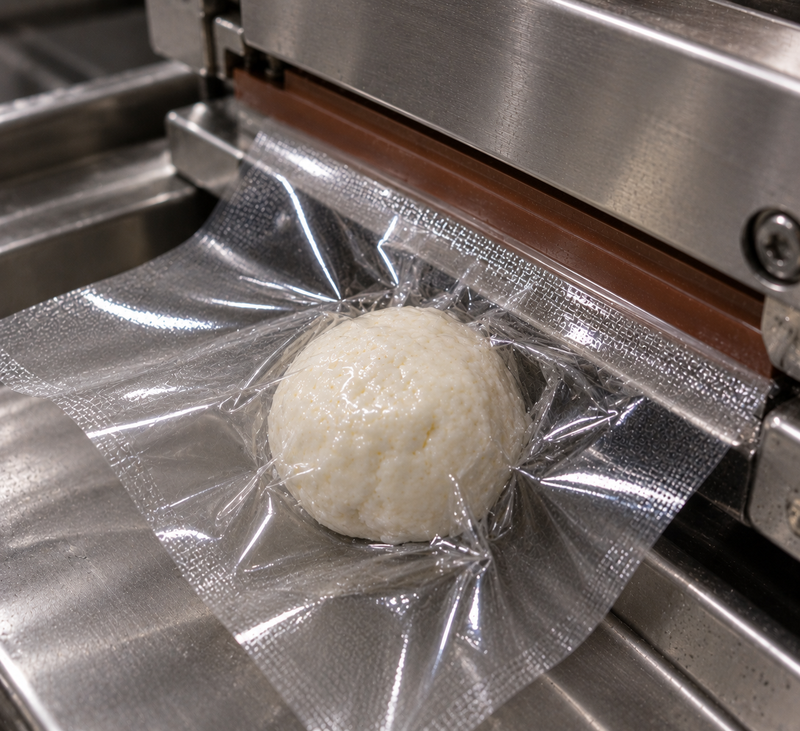
Vacuum-packed and bedded in gold
Each nugget is freshly vacuum-packed, stored chilled and placed in the gold tin with a card. It travels to you chilled by GO! Express.
For connoisseurs
What does donkey milk cheese taste like?
If you expect a strong goat’s cheese, you will be surprised. The donkey milk makes it delicate, pale and noticeably mild – the goat’s milk gives it structure and a subtle freshness.
“Mild, delicately sweet and clean on the finish – with a creaminess that melts on the tongue.”Our tasting profile
- Creaminess
- Mildness
- Delicate sweetness
- Freshness
- Salt
From the fridge → let it rest for 20–30 minutes → serve
Serving ideas
Five moments it is made for.

For special evenings.
A small quenelle of cheese on a warm blini or a mother-of-pearl spoon, topped with a hint of caviar. The mild creaminess balances the salty depth of the caviar.
- Goes well with
- Blinis, chive tips, a drop of olive oil
- In the glass
- A dry sparkling wine

For the aperitif.
Small pieces on thin crackers, with a few grapes and a touch of thyme honey. A nice way to welcome guests before the meal begins.
- Goes well with
- Fine crackers, grapes, thyme
- In the glass
- A dry sparkling wine

For a special cheese board.
As the centrepiece of a small cheese board: fresh figs, walnuts and a dark honey frame the delicate flavour without overpowering it.
- Goes well with
- Figs, walnuts, dark honey
- In the glass
- A light, elegant red wine

As part of the starter.
A quenelle on aromatic tomatoes, a few drops of basil oil, a wafer-thin sourdough crisp. Simply arranged.
- Goes well with
- Tomatoes, basil oil, sourdough crisp
- In the glass
- A crisp, dry white wine

For a sweet finale.
Drizzled with acacia honey, with fresh figs and chopped pistachios. For a festive touch, add a few flakes of gold leaf.
- Goes well with
- Acacia honey, figs, pistachios
- In the glass
- A sweet dessert wine
Serving suggestions. Caviar, wine and accompaniments are not included.
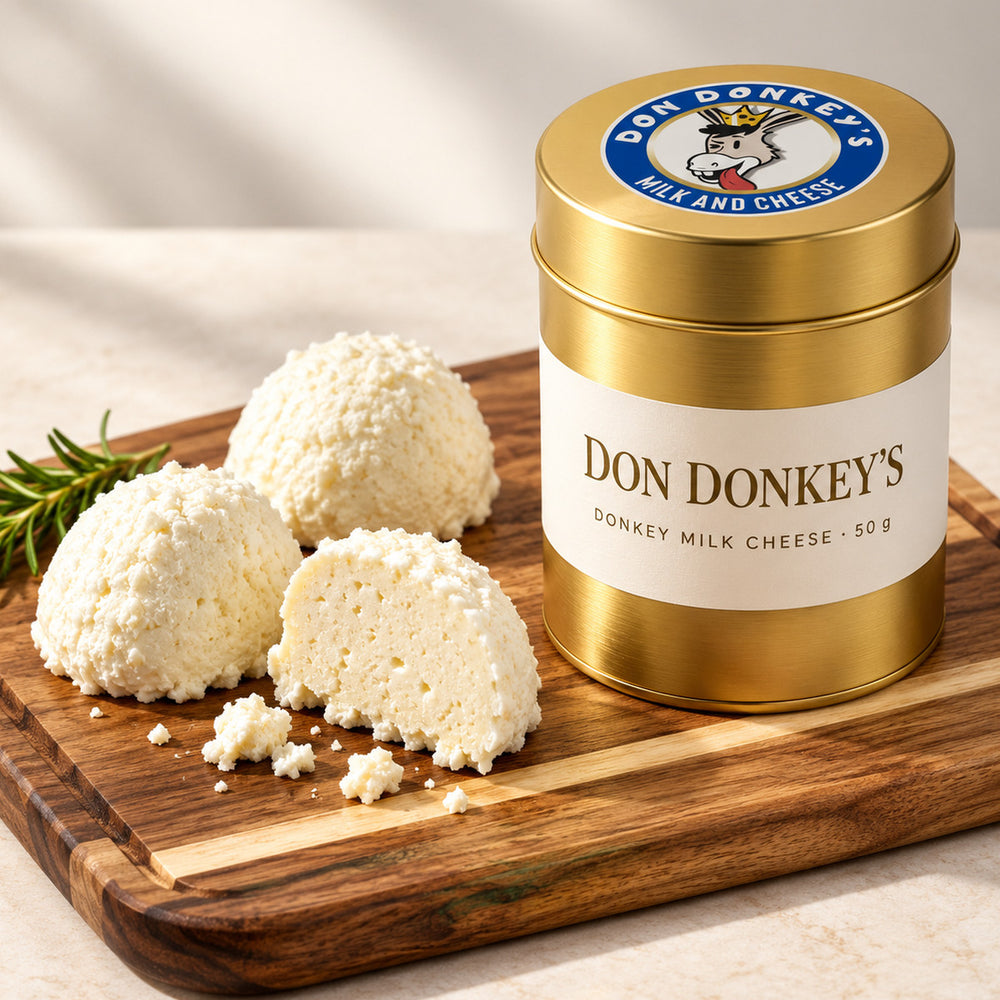
Unpacked
What is inside the gold tin.
A cheese that few people know deserves packaging you do not throw away. Each nugget comes individually bedded – for yourself or as a gift.
Frequently asked questions
All about our donkey milk cheese.
Anything else? We reply personally – Mon–Fri from 9 am to 5 pm.
What is your donkey milk cheese made of?
60 % pasteurised donkey milk and 40 % pasteurised goat’s milk, plus lactic acid, cheese cultures, calf rennet and table salt. It is a delicately creamy full-fat cheese (fat in dry matter min. 45 %). You can find the full details and nutrition information above under product information.
Why is there goat’s milk in the cheese too?
Donkey milk naturally contains very little casein – the protein that makes milk set. Pure donkey milk would hardly become cheese. A share of goat’s milk gives the cheese structure, the donkey milk brings delicacy and mildness. The 60 to 40 ratio is chosen deliberately.
What does the cheese taste like?
Mild, delicately sweet and clean on the finish, with a delicate, creamy texture. If you expect a strong goat’s cheese, you will be surprised: the donkey milk makes it pale and gentle.
Why is donkey milk cheese so expensive?
One kilo of cheese takes around 25 litres of donkey milk. A jenny gives only a little milk, and her foal drinks most of it. On top of that, there is handwork in every step – from milking to portioning. Each 50 g nugget contains around 1.25 litres of donkey milk.
Is the milk raw or pasteurised?
Pasteurised. The milk mixture is heated gently. The exact temperature is part of our recipe.
Is the cheese vegetarian?
No. We use natural calf rennet in production, so the cheese is not vegetarian.
How is the cheese delivered?
Chilled and in insulated packaging by GO! Express. We ship on Mondays and Wednesdays so that nothing is in transit over the weekend – in Germany and Austria your parcel usually reaches you 24 hours after dispatch. Free shipping to Germany and Austria.
How long does the cheese keep and how do I store it?
Please put it in the fridge straight after arrival. Unopened, it keeps until the printed best-before date. After opening, keep refrigerated and consume within a few days.
Does the cheese make a good gift?
Yes. Every nugget comes in our gold tin with a card and seal – a gift few people have received before.
How much do I get with 100 or 250 grams?
Our unit is the 50 g nugget. With 100 g you get two nuggets, with 250 g five nuggets.
From the same milk
More from the donkey milk.
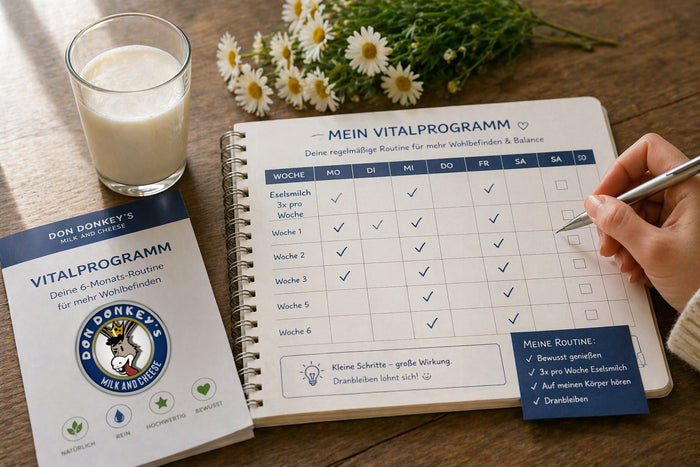
Fresh and frozen, freeze-dried as powder – or every 4 weeks with 30 % off in the Vitalprogramm.